

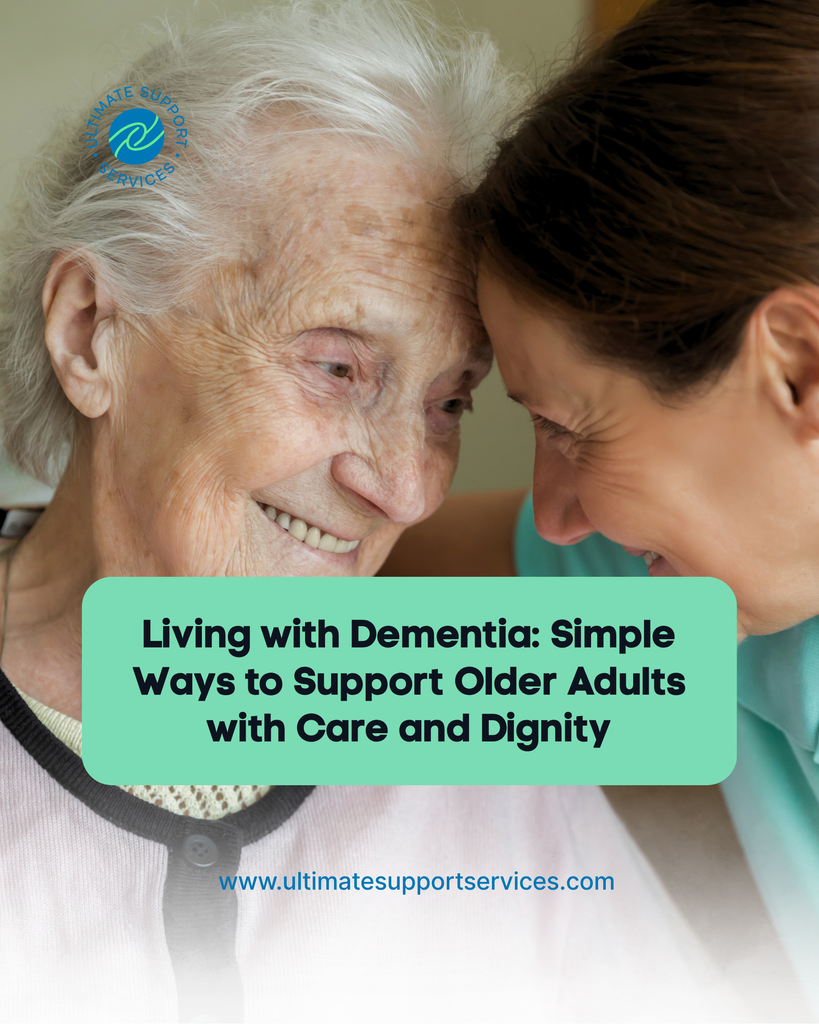
Dementia changes how someone experiences the world, but it doesn’t change who they are. It doesn’t erase a person’s history, their humor, their preferences, or their need to be treated with respect. As memory and thinking shift, what stays constant is this: they are still someone’s mother, father, grandparent, friend. Still fully deserving of dignity.
Today we want to talk about what dementia actually is, and some simple, practical ways to support the older adults in your life who are living with it.
What is dementia?
Dementia isn’t one specific disease. It’s a general term for a decline in memory, thinking, and reasoning that’s severe enough to interfere with daily life. Alzheimer’s disease is the most common cause, but there are others, including vascular dementia and Lewy body dementia.
Dementia usually shows up gradually, and it can affect:
- Memory, especially of recent events
- Communication and finding the right words
- Judgment and problem-solving
- Mood and personality
- The ability to complete familiar tasks
Every person’s experience with dementia looks different. Some people stay fairly independent for a long time. Others need more hands-on support early on. There’s no single timeline, and comparing one person’s journey to another’s rarely helps.
Read also: What is Intellectual Disability?
How to offer support with dignity
- Meet them where they are. If someone repeats a question or mixes up a memory, resist the urge to correct or argue. Gently redirect, answer kindly, or go along with what feels true to them in that moment. Being “right” matters far less than helping them feel safe.
- Keep communication simple and calm. Use short, clear sentences. Speak slowly, but not to a child. Give them time to respond. If words are hard to find, patience says more than any sentence could.
- Protect their routine. Familiar patterns, mealtimes, and environments can reduce confusion and anxiety. Big changes, even well-intentioned ones, can be disorienting.
- Involve them in decisions, even small ones. Let them choose what to wear or what to eat when possible. Independence in small choices helps preserve a sense of self.
- Watch for unmet needs behind behavior. Agitation, withdrawal, or resistance is often communication. It can mean pain, hunger, overstimulation, or fear, not defiance.
- Care for the caregiver too. Supporting someone with dementia is demanding, physically and emotionally. Caregivers need breaks, support, and grace, without guilt.
- Hold on to their personhood. Talk with them, not just about their care. Ask about their life, their stories, their opinions. Play their music. Look at old photos together. Dementia can take away certain abilities, but connection is still possible.
Dignity isn’t something people lose when their memory changes. It’s something we choose to keep offering, in how we speak, how we listen, and how we show up. At Ultimate Support Services, we believe every person, at every stage of life, deserves care that honors who they are. Because a person is never reduced to a diagnosis. They remain, fully, themselves.
