
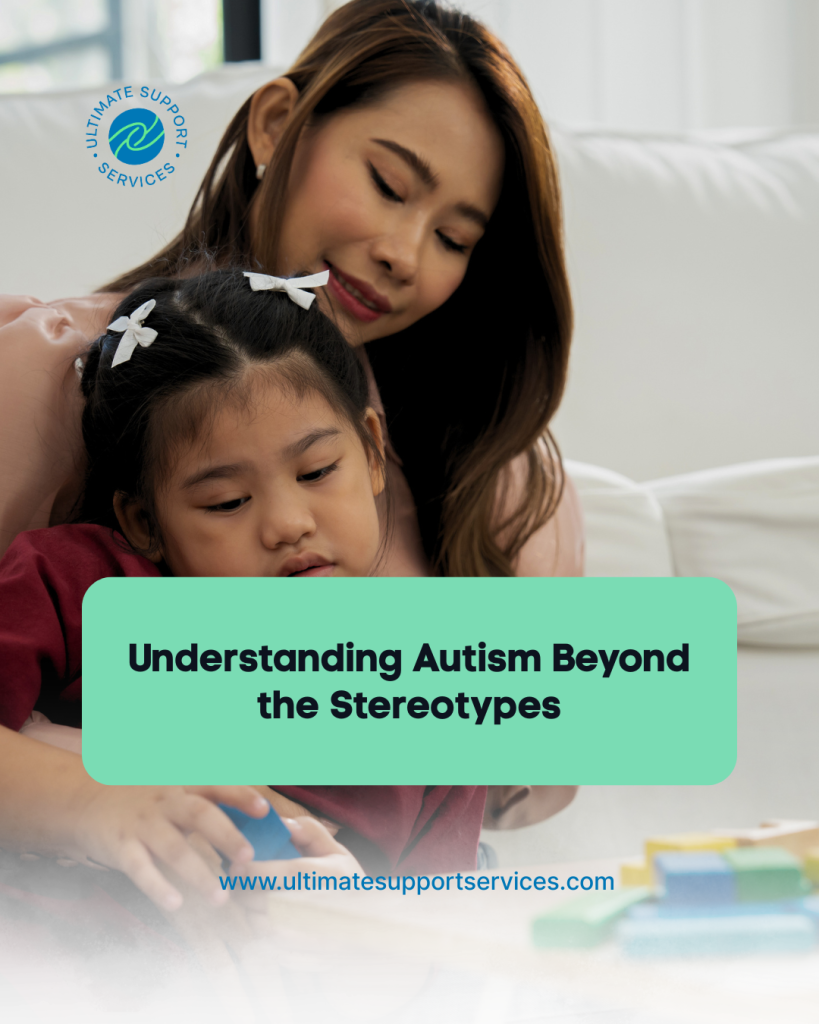
Autism is often misunderstood. Too many people still rely on stereotypes, outdated assumptions, or general descriptions when they think about autism. In reality, autism is a spectrum, which means it looks different from person to person and affects individuals in unique ways.
For organizations like Ultimate Support Services, understanding autism beyond the stereotypes is important because it helps build stronger communities, better care, and deeper respect for the people being supported.
What Autism really means
Autism, or Autism Spectrum Disorder (ASD), is a developmental condition that affects communication, behavior, social interaction, and how a person experiences the world. But autism is not a single story, and it does not look the same for everyone.
Some autistic people may be very verbal, while others may communicate in different ways. Some may need significant daily support, while others live more independently. The spectrum is broad, and each person has their own strengths, challenges, interests, and support needs.
Common Stereotypes About Autism
One of the biggest problems autistic people face is being judged by stereotypes instead of being understood as individuals. A few common misconceptions include:
- Every autistic person is the same.
- Autism always looks obvious.
- Autistic people do not want friends or relationships.
- Autism is only about challenges, not strengths.
These ideas are harmful because they oversimplify a complex reality. They can also lead to stigma, exclusion, and missed opportunities for support.
The strengths behind the spectrum
Autistic individuals often have valuable strengths that are overlooked when people focus only on labels or limitations. These strengths can include strong attention to detail, deep focus, creativity, honesty, memory skills, problem-solving, and unique ways of thinking.
When society makes space for neurodiversity, it becomes easier to recognize that autistic people are not defined by deficits. They are people with potential, preferences, goals, and meaningful contributions to make.
Understanding autism correctly can change the way families, schools, workplaces, and support providers respond to autistic individuals. It can improve communication, reduce frustration, and create environments where people feel respected and safe.
For service providers, this understanding is especially important because support should be based on the person, not the stereotype. Person-centered care helps ensure that each individual receives support that matches their needs, goals, and dignity.
How we can be more supportive
Supporting autistic people begins with listening, learning, and approaching each person with patience. Small actions can make a big difference:
- Use respectful, person-centered language.
- Avoid making assumptions.
- Learn each person’s communication style.
- Create calm, predictable environments when possible.
- Celebrate strengths, not just challenges.
These habits help build trust and encourage inclusion. They also remind us that true support starts with understanding.
Autism should never be reduced to a stereotype. Every autistic person deserves to be seen as a whole human being, not as a label or a list of assumptions. When we choose understanding over judgment, we create more inclusive spaces for everyone.
At Ultimate Support Services, that kind of understanding is at the heart of meaningful care. Supporting people well means honoring individuality, encouraging independence, and showing compassion in every interaction.
