

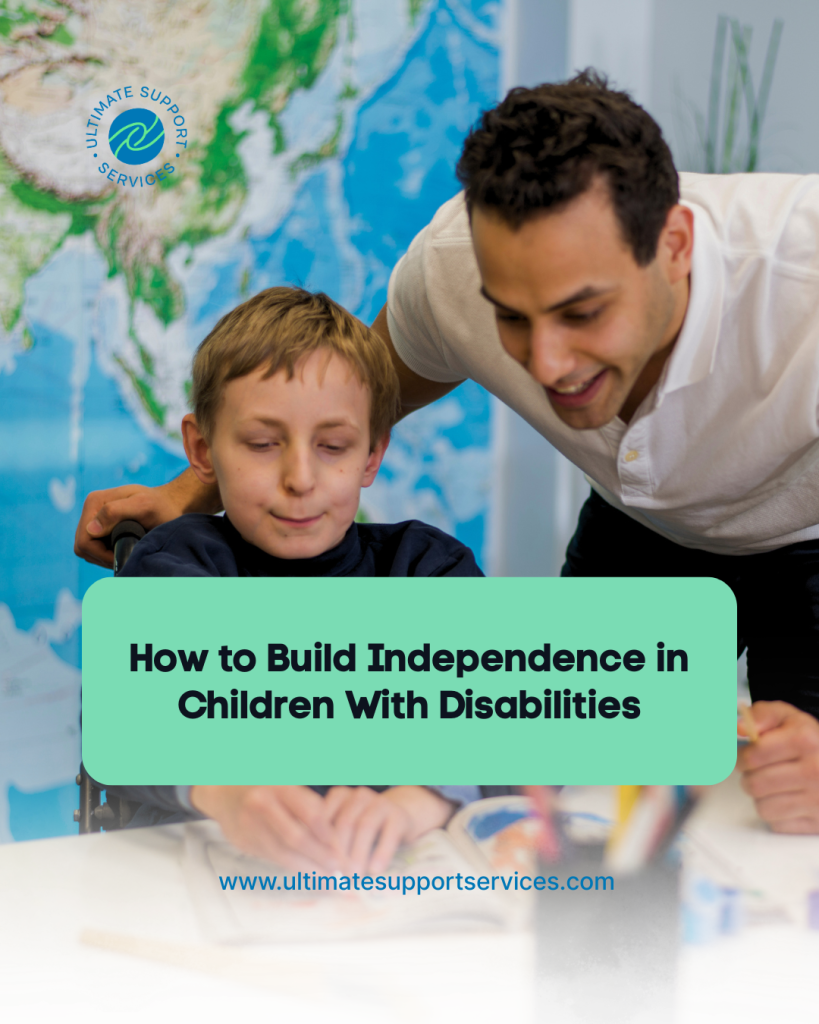
Raising a child with a disability often means balancing protection with preparation. Independence does not mean doing everything alone; it means helping a child build the skills, confidence, and support they need to take part in daily life as fully as possible.
Children with disabilities can grow in confidence when they are given chances to try, practice, and succeed at everyday tasks. Building independence early can support later life skills such as self-care, communication, money management, and community participation.
Independence also helps children develop a stronger sense of identity. When children learn that their effort matters, they often become more confident, more resilient, and more willing to speak up for themselves.
How to Build Independence in Children With Disabilities
Start with small steps
A good way to begin is to teach one skill at a time. Simple tasks like brushing teeth, folding clothes, washing utensils, or packing a school bag can be broken into small steps and practiced regularly. It helps to start early and adjust the task to the child’s ability. For some children, that may mean doing part of the task together first, then slowly letting them do more on their own.
Use routines and visual support
Many children do better when daily activities are predictable. Visual schedules, picture cards, checklists, and step-by-step instructions can make routines easier to follow and reduce stress. These supports are especially helpful for children who struggle with speech, memory, or transitions between activities. When a child can see what comes next, they often need less prompting and gain more confidence over time.
Teach self-care and daily living skills
Self-care is a major part of independence. Children can learn age-appropriate skills like dressing, hygiene, choosing clothes, preparing a simple meal, and caring for their belongings. Daily living skills also include healthy habits, such as eating well, keeping a routine, and learning how to ask for help when needed. These skills may seem small, but they build the foundation for more independence later in life.
Encourage communication and self-advocacy
Children need ways to express what they want, what they need, and when something is wrong. For children who have speech difficulties, communication aids such as pictures, sign language, or speech devices can help them participate more fully in daily life. Self-advocacy is also important. A child who can ask for a break, say no, request help, or explain discomfort is developing a skill that protects both dignity and safety.
Give responsibility, not pressure
Chores, simple choices, and small responsibilities help children learn that they are capable. You can let them choose between two outfits, carry a spoon to the table, or help with laundry in a way that suits their ability. The goal is progress, not perfection. If a task feels too hard, simplify it rather than removing it completely, and praise effort as much as success.
Support safety and community skills
Independence also includes learning to stay safe outside the home. Depending on the child’s age and needs, this may involve road safety, recognizing trusted adults, practicing how to ask for directions, or learning how to use public transport. Children may also need support with social situations, such as greeting people, ordering food, or paying for small items in a shop. Practicing these skills in real-life settings can make the child more comfortable and prepared.
Plan for the future early
As children grow, families should begin thinking about future education, work, housing, and support needs. Experts recommend starting these conversations early so there is time to plan, build skills, and explore the right supports. A practical approach is to talk with the child about their goals and involve them in decisions as much as possible. Even when a child needs significant support, their preferences still matter.
A gentle reminder for parents and caregivers
Supporting independence can feel emotional, especially when you have spent years protecting your child. But independence grows best in an environment of patience, trust, and encouragement. Your child does not need to do everything alone to be independent. They need the right support, the right tools, and repeated opportunities to learn in safe, respectful ways.
Building independence in children with disabilities is a gradual process, not a single milestone. With small steps, practical support, and steady encouragement, children can learn skills that help them feel more capable and included in everyday life.
